Showing posts with label Germany. Show all posts

Thursday, March 5, 2015

Neuschwanstein Castle: Inspiring Disney and Tourists Alike


If I were to build a castle, the first place I would look for inspiration would definitely be Disney. But where did Walt get his inspiration? The answer: Neuschwanstein Castle in southern Bavaria. The Bavarian King Ludwig II kept a close eye on his masterpiece during construction - he literally grew up and lived down the hill in the stately yellow Hohenschwangau Castle. Sadly, after pouring his effort and personal funds into the castle, he died before it was completed. Thankfully, even tourists of the late 1800s loved this castle and it opened its doors to tourists immediately following Ludwig's death. This is a Bavarian must-see. Pictures do not do it justice.
Unfortunately, the castle is loved more than ever by today's tourists. Neuschwanstein Castle (and neighboring Hohenschwangau Castle) is a buzzing hive of tourists pushing for the best selfie-stick view all along the hill upon which the castle is perched. Here are three tips for making the most of your trip:


1) Plan ahead: if you want to see the inside of the castle, you must purchase tickets days ahead of time, even in the off season. Given the demand on a random cold, foggy December day, if you are trying to visit in the summer, I would purchase tickets weeks ahead of time. Decide if you want to see Neuschwanstein, Hohenschwangau, or both! With planning, touring both is very doable. (Hohenschwangau pictured in the picture on the left)


Marienbrucke: I hope the bridge
will hold everyone!
2) Seek optimal weather: the view of the castle is awe-inspiring as you drive up to the small town of Hohenschwangau, but if you visit in the October-February months, beware that the unknown but ever prevalent German fog may obstruct this view, and any others you plan to get for that Christmas card. Also, the walk up and down the hill is quite lovely if it is not freezing or pouring down rain. I have to say, when the castle peeked out through the fog, it was magical; however, had we not soaked it in for the five minutes it was available, we might have missed a view entirely.

3) Wear comfortable shoes: I was inclined to wear my most fashionable outfit for what I thought would be several frame-worthy photos, but be ready to walk through the dirt and exert yourself a little bit to get to the top! If you refuse to look like anything other than a Disney princess, you can take a horse-drawn carriage to the top for a hefty fee, or the bus for a long wait time.

Though I still believe a visit to Neuschwanstein should be high on your Bavarian to-see list, particularly since the scaffolding from its recent renovation has been removed, managing your expectations and taking a few precautions ahead of time will ensure that it is fairy-tale visit you always dreamed!


Tuesday, February 24, 2015

Oberammergau

Walnut shell carvings in Oberammergau

A year ago, I fell in love with a monk. He was smiling as he checked his beer at a flea market in Regensburg. At just a foot tall and surrounded by nick-knacks, I thought 100 euro for the wooden statue was too much, but I never forgot him!


Decorated buildings around the city
With him in mind, we 'carved' an afternoon out of our trip to Garmisch to check out the quaint city of Oberammergau. Our family friends who lived in Germany 30 years ago first told us about the city when they came to town: painted buildings and wood carvings with the alps as a backdrop. Too good to be true?

Oberammergau did not disappoint. There were wood carving shops on every corner, with everything from painted wooden religious statues to colorful signs peppered with cherubs to tiny carvings delicately placed in walnut shells. I soon discovered that maybe I should've taken the 100 euro monk statue and run - I didn't see many that size for under 400 euro. That said, every piece we saw was a work of art and truly remarkable. The time these artisans invest in just one piece is unbelievable.

Typical Oberammergau wood carving store 

Most of the pieces depict religious scenes, and perhaps the reason the artists are able to make their pieces almost come to life is their real-life experience acting out the Passion Play. Every year ending in zero, Oberammergau's citizens band together to put on the Passion Play. This isn't just any play - they take pride in performing with incredible realism, and have since the 1600s. One of the artists told us cutting your hair and shaving is banned for three years. Yes. Those beards are real. The animals used in the play are raised by the people in the town, and they don't just perform at any auditorium: the whole city is the stage for this play.
If you are lucky enough to be in the area in 2020, you better make reservations now. This event is world-famous, and after hearing the effort and pride the people pour into the performance, I can see why!


Close up of a beautiful wood carving in
Oberammergau's church


For those of you visiting in the other nine years of the decade, perhaps the best surprise of our trip was the Parish Church St. Peter and Paul in the middle of town. The unassuming exterior only enhanced an already spectacular interior, flanked with, you guessed it, beautiful wood carvings. The wooden statues were sanded and painted so beautifully it was hard to believe they were wood.

Oberammergau makes an excellent stop on any southern Bavaria road trip. If you are interested in the carvings, do not expect a heavy discount for buying at the source. If you've already ruled that part out, it's still worth a stop to soak in the beauty in this Bavarian city!


Thursday, February 19, 2015

The Mercedes Benz Experience

Though I have been living in the home-state of BMW, we recently ventured outside Bavarian borders to see how the rest of Germany engineer things. I'll give you a hint: it involves some pretty amazing robots.

While in Stuttgart, we checked out the Mercedes Benz Museum and were also lucky enough to get tickets to a factory tour. The museum is open seven days a week, but the factory tours only run on the weekdays, making it difficult to fit into a weekend trip. If you can make it work - it is worth it. The two-hour, incredibly polished factory tour was completely free. It has undoubtedly made me a Mercedes fan (now how to fit one in the budget??).
We took a tour of the Sindelfingen factory, which produces the C, E, and S Class Mercedes. The campus is pristine. We arrived early and enjoyed a delicious (and surprisingly reasonably priced) lunch in a quaint garden. It was easy to forget we were in a car factory. The tour started with a video that got us excited about what we were going to see. The English-speaking tour guide then took us on a bus to the S Class plant. I have a new respect for robots. It honestly seemed like the humans were simply there to assist the robots, which operate 24 hours a day. We were inches from the 20', incredibly nimble robots, and were able to see them use tools (yes - as in what distinguishes us from the rest of the animal kingdom). The robots go straight from welding, to testing the joints, to gluing the pieces together. Then they pick up the frame, door, or trunk and toss it to the next assembly point. It was really amazing.

One of the first
Mercedes Benz cars
From there, we ventured to the E Class plant to watch the cars get their character: sunroofs, steering wheels, and dashboards were among a few of the things we saw assembled. At this stage, each car is built for a specific order, and there is no room for error. I was pleased to see a little more human labor put into this stage, though there was still no shortage of impressive robots. It's always nice to know that humans are still superior to machines.
No pictures are allowed on the factory tour, so you have two options: trust me, or go see it yourself. I definitely recommend the latter. If you want to book a tour, it is best to do so far in advance. Details can be found on this website. 


The Popemobile
For those who are unable to make it to the factory tour, the museum will still make anyone into a car enthusiast. The circular building spirals you down history, starting with the first ever Mercedes Benz (which was taken on its first drive by a woman!), and ending with future models. There is an exhibit dedicated solely to celebrity cars (Popemobile, Grace Kelly's 190SL, Bus for Germany's 1974 World Cup Champions team), one showcasing the green energy cars, and of course, a large exhibit with an impressive amount of winning race cars. It is a beautiful museum and worth the trip. 


Germany's 1974 World Cup
Championship Team Bus
(that's Patrick driving!)


Mercedes perpetuates its luxury brand during their factory tour and even in the tourist-heavy museum. We experienced nothing but amazing service and saw exactly zero hand prints in the beautifully buffed cars in both the factory and the museum. The only thing that would have enhanced our Mercedes Benz themed outing would be picking up our own Mercedes at the factory... I guess one can dream!

Saturday, September 27, 2014

World Cup Victory

In case you haven't heard, two months ago Germany won the World Cup. For those of you wondering what it was like to be in Germany for the win, here is a peek into the late-night festivities that occurred at our local traffic circle (and yes, those are full-grown men at the top of the street signs):

Saturday, September 20, 2014

Rhine Valley

Whenever people discover that we live in Bavaria, they often sigh and say it is the prettiest area of Germany. The half-timbered houses in quaint villages among green forests, hills, and even the Alps do provide quite the postcard.

What we learned recently is that these people (us included) are sorely mistaken. The Rhine Valley region trumps them all. We had previously seen the Liechtenstein and Swiss segments of the Rhine Valley, and those the Rhine Falls were breathtaking, but the Middle Rhine area just west of Frankfurt was our favorite of all.


Imagine colorful, traditional German houses lining a beautiful river. Add the Alps in the background. Now paint in vineyards with grape vines crawling up the hills from the river. Pretty, right? Top it all off by sticking a Disney-quality 12th century castle every mile. Any child that witnesses this region probably believes all princesses come from Germany, and every fairy-tale is based here. I might agree with them, as well!


This is a too-easy side trip from Frankfurt. It's an hour drive from the airport, and a great alternative to staying in the industrial city center. It is a must-see in Germany! Below are my recommendations for the best activities in the Rhine Valley region:

Burg Rheinstein


Cruise along the river: We did not have time for a river cruise, but instead opted to take advantage of our fabulous hotel's free bikes. We snagged two beach cruisers and took a leisurely, 16 km ride to Bingen, a slightly bigger town. There are convenient bike paths along the river, and most of the towns have a cluster of restaurants with water-views.


Sample local wines: It's obvious as you look around that the region produces a fair amount of wine. Interestingly, many of the vineyards are actually government subsidized. Regardless, the white wines are delicious. Many restaurants offer a tasting option that includes a Lazy Susan of wines (seriously!). With 15 samples, it's easy to make a night out of it!


Hike to the best views: We took trusty Rick Steve's advice (also vetted by our friends Kyle and Catilin) and stayed in the town of Bacharach. It was smaller than the rest of the towns, but less touristy. One of the highlights was walking to the top of town, then hiking up past vineyard to a lookout tower. From here, we could see the city's castle (which is now an affordable hostel), the river, and the bones of an old church which lost its wooden roof and doors in a fire. Though I am not a fan of hiking, it was worth it for the view!
View of Bacharach from the top
Catch a local festival: Particularly during the summer, every town hosts at least a couple festivals. They come in all shapes and sizes: wine, beer, firemen, church, etc. We stopped by the strawberry festival (Edbeerfest), but unfortunately missed the opening ceremonies. If you can, plan your trip around one to enjoy a more authentic experience.

Burg Eltz
Tour a castle (or two, or five): I was serious when I said there is a castle every mile. If you take the Rhine river down the 38-mile stretch from Bingen to Koblenz, there are 40 castles along the way. This piece of the valley is a UNESCO World Heritage site, and a great place for anyone to get their European castle-fix.
We toured two: Burg Rheinstein (pictured above) and Burg Eltz (pictured here). If I had to pick one, Burg Eltz provides a much more rounded experience. The castle is actually a compound of three castles, which were homes to the three offshoots of one family. The family still owns the castle today, and one is decorated with original furniture, fixtures, and artwork. The extremely informative English tour was included in the €9 entrance fee. Only problem is: it's a little more difficult to reach. We drove on our way out with no problem. If you plan appropriately, you will not be sorry!

Wednesday, June 11, 2014

650 Years of Amberg Fests

In true Bavarian fashion, a city earns its stripes only when they have their own local fests. 650 years ago, elector Ruprecht I (aka "The Red") gave this right to Amberg.
Photo Credit: Amberger Congress Centrum

To give you a sense of how important these rights were, Ruprecht "The Red" had this on Elector to-do list 22 years ahead of starting the University of Heidelberg! And to put it in perspective for other Americans, the people of Amberg were celebrating the summer season with cold beers and music before Columbus even sailed the ocean blue.
So how do Amberg's 40,000+ citizens celebrate such an important anniversary? With a particularly special kick-off to the Amberg fest season, of course!
This weekend, I had the privilege of seeing the opening ceremonies for the 650th Amberg Dult (aka "carnival" or "fair" in English). Though the Dultplatz (fairground) is actually about a mile down the Vils River, the fest started early Friday evening with free beer from the local brewery, Kummert Bräu. If they were handing out free beer in the city center of any American town, there would likely be a full-fledged mob; however, the people of Amberg were sipping on the special 650-year-anniversary brew as if it were any other day. Needless to say, I was enthused.


Freibier (Free beer is easy to translate!)


After the music stopped, 60 people, eight kegs, two tubas, and a basket full of pretzels loaded on two long boats for the trip down the river. The music played as people sipped on freshly tapped beer. They unloaded at the Dultplatz and set up for the evening tapping of the first Dult keg. After several hours, the whole city enjoyed a 15-minute fireworks show signaling the start of Dult week.
If you are around Amberg, the Kummert Bräu free beer cart has been spotted since: they were playing music and handing out fresh, cold beer at 10:00 am in the marktplatz the next morning. I recommend keeping an eye out for it! More importantly, the Amberg Dult runs through June 15th at the Dultplatz on Bruno-Hofer-Straße.

For those of you who are not able to make it to the Dult fest, this is just the first of three fests that were granted to the city of Amberg 650 years ago. There is still plenty of time to catch the Mariahilfbergfest from June 28 through July 6, the Altstadtfest July 19 & 20, or the fall Dult September 26 - October 5. 

Monday, June 2, 2014

Würzburg Weindorf

Bavaria is synonymous with beer... right? That's what I previously thought driving around the state through endless fields of hops and banners for beer fests in every tiny town. This weekend, however, we experienced another, sweeter side to Bavaria: the wine region of Franconia.
Würzburg is the capital of Lower Franconia (the region is split into Lower, Middle, and Upper Franconia), which, though geographically in the German state of Bavaria, is culturally a very different entity. Not only did Franconia not become a part of the state of Bavaria until 1803, but instead of fields of hops taller than a San Francisco town house, the city is covered in beautiful vineyards. Even the back of the train station is one large grape vine grid, just in case you need reassurance that you're in a different neck of the Bavarian woods. Franconia is known for their dry, white wines poured out of short, wide, flat bottles known as Bocksbeutel. But how can you possibly sample a variety wide enough to decide which bottles to buy and carefully stash in your backpack? The answer: The Würzburg Wine Village (Weindorf).

Würzburg Marienkapelle - the backdrop to the event


For two weeks, in the heart of Würzburg, beneath the wooden huts and tasteful tents in the markplatz lie vendors selling over 100 different Franconian wines. Full disclosure: this is not a traditional German fest. Though there were plenty of fest tables and clearly the alcohol was flowing, the Weindorf seemed to have a slightly more subdued atmosphere than the traditional stadtfests. We all tried different types of wine while munching on cheese platters and bratwursts. The Weindorf also stops serving at 11:30 p.m., so the table dancing and stein pounding was notably absent. Regardless, it was a great weekend with great wine.

Whether you have been reluctantly grimacing through beers throughout your stay in Germany, or you are just looking to experience a different aspect of German culture, the Würzburg Weindorf is a great option. For 2014, it runs through June 9th. Reservations are not needed for regular-sized parties - we found a full table with no problem. If you can't make it this year, no need to fret. The Wine Village is in its 28th year, and with over 100,000 visitors each year, it shows no signs of slowing down!

Website for the fest is available here - make sure your browser's translator is turned on)

Saturday, May 3, 2014

Stuttgart Frühlingsfest

Almost on cue, as soon as the last Oktoberfest tents are dismantled, German winter seems to begin. Though Germans still find excuses the celebrate the season (Glühwein, anyone?), true fest season kicks off again six months later in April with Frühlingsfests, aka Spring Fests.

Dirndl and Lederhosen are recommended

Though cities all over Germany (and other countries in Europe, too) hold their own Frühlingsfests, the crown for the largest Frühlingsfest in Europe belongs to Stuttgart. For three weeks, the capital of the Baden-Württemberg state is inundated with local and visiting patrons of their festival. We were lucky enough to be tipped off to the fun by a good friend and former Stuttgart resident, who helped us plan our time. I was also thrilled to have a friend from London visit for the experience!


Amazed by the
ride selection
Though I hold a special place in my heart for the Texas State Fair, I couldn't help but think that the Stuttgart Frühlingsfest was just like the Texas State Fair, but with more singing, dancing, and beer. They had carnival rides, vendors, all types of foods, Biergartens, and the traditional beer tents one would find at Oktoberfest.
We did not make reservations in a beer tent and, unlike at past festivals we have attended, they wouldn't even let people in the tent without a reservation and corresponding wristband. Plan ahead if your goal is to stand on the garden tables with a liter of beer! We did find a spot at a Biergarten and enjoyed the atmosphere and perfect weather just fine.


Gearing up for
the bumper cars


This festival continues through May 11th. I personally feel as though I am a more well-rounded German resident after attending the Stuttgart Frühlingsfest, and look forward to another round in 2015!


Friday, August 23, 2013

Where's the beef?


As mentioned in my previous post, many of the German cities, especially in Bavaria, hold an annual Stadtfest (city festival) for one weekend during the summer. Though we did not find a hamburger at the Regensburger Bürgerfest (citizen's festival), I did have two unique "pinch-me" moments that will not be forgotten~


Drinking beer on the steps of the Regensburger Dom (Cathedral, pictured above): I want to be clear that we were not rogue, disrespectful fest-goers. They actually had tables set up next to the gorgeous Catholic church. I couldn't help but wonder how many times Pope Benedict XVI visited this church while he was a professor at the University of Regensburg. I can't argue with that as a festival backdrop.


Dancing to Luckenbach, Texas and singing along to Sweet Home Alabama: One of the more amazing country cover bands was playing right along the Danube river. Here they are playing some Waylon Jennings, and the fabulous cluster of impressive line dancers that enjoyed the music almost as much as us. A few weeks prior, Patrick had said the only thing that would make German fests better is some solid country music. We found the jackpot!

Friday, July 26, 2013

Amberg Altstadt Fest


Who knew our humble village of under 50,000 could throw such an impressive festival?
During the summer in Germany, most cities hold some kind of Stadt (city) fest. They usually only span one weekend, which makes the extensive events even more impressive. Recently, we attended our local Stadtfest - the Amberger Altstadtfest. Who knew that a town of under 50,000 could draw such a crowd? There was not a nook nor cranny uncovered by festival spirit in the Amberg Altstadt. We counted five stages with various bands, several family friendly sidewalk performers, all of the major local breweries, and countless brats.

This is my favorite festival to date - not just because of the five minute walk from my house. The city is a manageable size but offers plenty of attractions for the fest. There was a substantial crowd to encourage singing along, but we did not have trouble finding a table. It also didn't hurt that the sun was shining down on a perfect 70 degree weekend!


Tuesday, July 9, 2013

Berlin Underground Tours

Prior "this would never happen in America" moments:
  •  Dogs allowed inside restaurants
  •  Deli and bakery workers serving customers bare handed
  •  Dentists working on patients bare handed
Newest example of this train of thought:
  •  Standing next to original WWII toxic glow-in-the-dark paint in a Berlin bunker

How did I happen upon this precarious situation? The Berliner Unterwelten (Berlin Underground) Tour. A group of archaeologists formed the Berliner Unterwelten in 1997 to preserve, analyze, and share Berlin's "subterranean architecture" with the world. After excavations and plenty of research, they started offering tours of various underground highlights. We had the pleasure of taking the WWII bunker tour a few weeks ago. The tours guides are incredibly knowledgeable, friendly, and speak wonderful English.
This tour was hardly your run-of-the-mill WWII history lesson. The tour guides focused on the unusual aspects of their exhibits. We learned about how Hitler's regime required citizens to purchase expensive "air raid survival kits" to raise money, regardless of the fact that they would not help in a true air raid. He also lacked the time or money to build sufficient bomb shelters, so the pre-existing bunkers we toured were decorated as such and air raid drills were held inside, again painting the picture of safety despite a lack of structural support.
The tours are capped for good reason - as we all huddled into the "shelter," I was thankful for this. Plan ahead for the English tours and get there early (it's conveniently across from the Gesundbrunnen underground station). They offer a variety of different tours - I am eyeing the "Breaching the Berlin Wall" tour next!
Berliner Unterwelten website: http://berliner-unterwelten.de/home.1.1.html
Underground tours: http://berliner-unterwelten.de/files/buev_flyer_eng-spa_2013-06_web.pdf

Sunday, June 2, 2013

10 Resons to Visit the Gläserne Manufaktur

Though I had heard of the Volkswagen Phaeton before moving to Germany, I had never seen one in person. VW's top of the line car starts at $65,000 but averages well over $100,000. Though the car comes with either a V6 or powerful V8 engine, the majority of Phaeton owners are not driving the car themselves, but instead telling Jeeves where to go from the back seat.
The Gläserne Manufaktur (photo credit: http://www.glaesernemanufaktur.de)
Phaetons are made exclusively in Dresden, Germany in the beautiful Gläserne Manufaktur (transparent factory). Here are 10 reasons the factory tour was the highlight of our trip to Dresden:
  1. The building itself: Almost all of the walls in this pristine factory in the middle of Dresden are made of glass (hence the name "transparent factory"). The 16-story cylindrical vehicle tower proudly showcases up to 280 cars at once. Since everything is transparent, you can see the manufacturing process from different angles at all times. There is no bad view! Surrounded by parks, the landscaping is also a marvel - there was even a large pond with blooming waterlilies and goldfish in front of the main entrance.
  2. Environmental concern: Apparently some found the Gläserne Manufaktur to be a little too transparent. All year long, you can hear birds chirping through speakers in the trees to keep real birds from nesting in the surrounding trees (they planted over 350). Apparently the local birds were in danger of running into the windows and meeting their maker.
  3. White glove dining service: We opted for the brunch/tour package, which, for €35 a person, includes an extensive and delicious buffet, drinks, alcohol, and the tour. The restaurant was elegant, and eating among the Phaetons made us feel very fancy.
  4. White glove manufacturing service: That's right, employees of this assembly line wear white gloves and white lab coats. Buttons are strictly prohibited to avoid paint scratches and dings.
  5. The tour: Capped at 15 people and offered in English (or eight other languages!), you will definitely feel special on the 75 minute tour. At only €5 a person, they do book up quickly, so plan ahead! Thankfully the factory is open seven days a week.
  6. The assembly line: A far cry from the black rubber conveyor belt I was picturing, the Phaetons glide across the factory on a beautiful hardwood floor conveyor belt . The cars can rotate around in a circle to give the workers the best angle, and robotic arms pick them up delicately to move them to the next station.
  7. Lack of robots: Our tour guide was proud that almost all of the Phaeton is assembled by hand. Only four robots are used in the process (fitting the windows, installing the spare wheel well, aiding the "marriage" of the chassis with the body, and engraving the back of the car with whatever the customer desires).
  8. VW "CarGo Tram": The main logistics center is located on the other side of Dresden, so instead of moving everything by truck, VW bought their own special, bright blue tram to transport the materials. The tram can be seen around Dresden - it cuts through the center of the city!
  9. Customization: Though over half of the cars produced are in straight black, VW allows for extreme customization of the Phaeton. Customers can bring in materials to include on the interior, and paint colors can be mixed to match anything. Rumor has it they even created a yellow Phaeton to match a customer's dress!
  10. Acting like a boss: Sitting in the back right of the Phaeton was pretty cool, but particularly after we learned about the "Boss Button" on the right of the back center console. Since the owners of these cars are generally chauffeured around town while seated in this coveted spot, there is actually a button to force the front passenger seat forward in case the leg room is not sufficient. Like a boss.


Thursday, May 30, 2013

Dresden for free!

While visiting Saxony's capital city, one would have no idea that 68 years ago, this beautiful city was reduced almost entirely to rubble. Late in WWII, the Allies dropped over 2,000 tons of bombs on Dresden, which destroyed over 90% of the historic city center and took the lives of over 20,000 civilians. Since then, the city has remarkably bounced back - painstakingly recreating the beautiful baroque buildings while tactfully reminding visitors to the city of the destructive cost of war.

Now Germany's 11th largest city, Dresden has done many things right in their reconstruction. Their extensive and highly efficient tram system is clean, easy to use, and fast. Green areas and forests account for 63% of the city - the abundance of gorgeous parks makes a stroll through the city center absolutely idyllic. The Elbe river divides the Altstadt (old city) and Neustadt (new city) perfectly, and allows for some spectacular city views.

One of the best parts about our visit to the city was the abundance of free sights. Below are our top 5 favorite free Dresden experiences:


Frauenkirche: This stunning Lutheran church lies in middle of the Altstadt - it cannot be missed. Though it withstood some of the WWII bombings, after the 1945 bombings the Baroque church burned for two days before it completely collapsed into a pile of ruin. For years the city left the rubble as a memorial to the destruction of war. In 1989, Dresden's citizens organized an effort to rebuild the church. After literally numbering the surviving sandstone bricks to ensure their original placement using the original plans, the Frauenkirche was reopened in October 2005. It is breathtaking and you can see the original, dark bricks throughout the building easily.


Military History Museum (Militärhistorisches Museum der Bundeswehr): Free to soldiers from any of the NATO countries, €3 for students, and €5 for adults; this might not be free for you, but it is still a steal. This museum walks through all of Germany's military history, and of course offers an extensive WWII exhibit. The building is huge which enables them to display a 45' V-2 rocket, one-man submarine, multiple tanks and cannons, and even a mounted elephant (lion and elephant rear pictured above), all while making you feel like no one else is in the museum. The exhibits are chronological and themed and include German and English explanations for everything from the rocket to the tiny bullets. I was overwhelmed with the information and exhibits at this museum; it was perhaps the first war museum that held my interest for over an hour, and I could have stayed for two.


Fürstenzug: It took over 23,000 tiles to put together the gilded mural longer than a football field portraying of Saxony's rulers and famous citizens. We enjoyed the evolution of attire, weaponry, and general appearance as we walked down the porcelain mural. In case you get lost in time, there are dates at the bottom of the mural to guide your way!


Brühl's Terrace (Brühlsche Terrasse): Though the "Balcony of Europe" was never anything less than crowded throughout our stay, I still felt like I was a character of Downton Abbey as we paused along the railing underneath the perfectly planned and groomed rows of trees and looked out on the Elbe River. Destroyed in the 1945 bombings, this promenade is another example of Dresden's amazing reconstruction. The city's lights were particularly spectacular on our nighttime stroll.

Dixieland Jazz Festival: Europe's biggest jazz festival transforms the city into a European New Orleans (there were even t-shirts saying so!). There are stages set up every few blocks with jazz bands and street musicians are out in full force. Though there are fabulous concerts throughout the city that require tickets, we enjoyed the free concerts all over the Altstadt. We were sad to miss the concert on the river, but loved eating our dinner outside while enjoying the music and general environment. If you are thinking about Dresden any time near mid-May, try to overlap with this fabulous fest!

Wednesday, May 22, 2013

Beautiful Bamberg

Anyone interested in a gondola ride?


I have yet to be so jealous of another city in Germany. The city of Bamberg literally has it all. Not only is it the most perfect German town I have yet to lay eyes on (I am not alone in my assessment here, it is a UNESCO world heritage site), but Bamberg has the goods to back it up.


Bamberg's historical town hall
built on an artificial island: Altes Rathaus
In our six hour whirlwind trip, we:
  • Snapped an obligatory but amazing shot next to the Altes Rathaus (seriously, only the coolest city builds their town hall on an artificial island in the middle of a bridge)
  • Ate sushi, which is a rarity in the center of Germany
  • Watched a kayaking lesson on the river
  • Debated a gondola ride
  • Snacked on frozen yogurt for the first time in six months
  • Tried their unique smoked Rauchbeir (think beer + bacon flavoring)
  • Browsed a fashionably worthy boutique
  • Participated in a city-wide bar hop
  • Ended the night at the top of one of the city's seven hills (Rome has some competition here) in a biergarten, with a beer, overlooking the city with a fabulous group of friends


There is more to come on this city because I am going to need a whole weekend to even graze the surface, or perhaps I'll just set up camp and stomach the 1.5 hour commute during the week!

Monday, May 20, 2013

Nuremberg Spotlight: Blaue Nacht

Every year in early May, the museums, churches, and other sights of Nuremberg stay open until the wee hours of the morning to receive around 120,000 visitors on the Blaue Nacht (Blue Night). The buildings participating are literally lit up blue to guide your way through the Altstadt's sights, making it the perfect opportunity to see the sights in a different light (pun intended). Patrick and I strolled along the romantic, blue-lit streets, listened to a free classical music concert in a local church, and enjoyed the energy of the city well past midnight. Though we did not stay to see just how late things were open, judging by the crowd at 1:00 am, we were not even close to the tail end. If you have yet to see some of the churches and museums in Nuremberg, this is a magical night to do so. Even if you have hit them all, seeing the St. Lorenz Church glow in the middle of the Altstadt makes it worth the train ride!

Thursday, May 16, 2013

Nuremberg City Beach

It hasn't really felt like summer here yet. How could it when you have to carry a coat with you on the weekends? But while exploring Nuremberg, we found one event that brought the summer and sand to Bavaria regardless of the temperature!
Just across the canal in Nuremberg's Altstadt, the 4th annual Sommer in der City is hopping. We were fortunate to encounter the party on the 1st of 12 weekends, and will definitely return when the weather is better. The event is best boiled down by the numbers:
1 acre of Nuremberg's Altstadt
600 tons if sand
1,000 lounge chairs
45 giant palm trees
2 beach volleyball courts
1 pool bar (seriously... see below)
€0 entrance fee

Pool bar - sadly no one wanted to dip their feet in just yet!

As you can tell, they literally set up a beach in the middle of Nuremberg, and it was awesome. If you want to sip on some daiquiris at the beach and forget how far away you actually are from the nearest white sand experience, it is highly likely that we will run into each other!

Insel Schütt
90403 Nürnberg
May 3rd - July 21st
Monday to Thursday: 11:00 - 22:00
Friday and Saturday:  11:00 - 23:00
Sunday:                      11:00 - 22:00

To reserve tables, lounges, or sports fields: +49 (0) 163-867-4482


Tuesday, May 14, 2013

Who wants to share a keg anyway?

Have you ever cheered on a keg stand, then hesitated before begrudgingly using the same tap to pour your beer? If thinking about the germs ever cramps your drinking style, or you just want to pour and drink beer like a boss, Nuremberg has the place for you!


Just five minutes from the Hauptbahnhof on the main street lies Barfüßer. The unassuming facade wipes your expectations, which are then immediately re-lifted as you walk down the old staircase into a bustling beer hall.
The food and drink are typical for a German beer hall - brats, schnitzel, spatzle, hefeweizen, and dunkle beir. The treat is in the presentation. I felt like I was sitting in the Hogwarts dining hall, but with an abundance of alcohol. 600 people can dine simultaneously in the downstairs section - when a bachelor party broke out in song, we of course felt inclined to join!
The highlight of the night was pouring our own beer from our personal 5L kegs. Our table ordered one for each end. I was thankful to have been seated next to a friend who aced the Guinness pouring class during his St. Patty's trip to Dublin, and I reaped the rewards big time.
If you are looking for a solid, inexpensive German experience, complete with German food, a personal keg, and hopefully some singing Germans, this is without a doubt worth a stop!


Monday, February 11, 2013

Frau Robertson and the Schokolade Factory

I'm not sure if it's the clean-cut, square branding, the seemingly unlimited variety, or the fact that it's German, but I have been hooked on Ritter Sport chocolates since arriving in Germany. This Christmas, I developed a serious addiction for their winter coconut macaroon flavor right before they decided to take it off the shelves. After searching through all the local grocery stores, I decided to go straight to the source: the Ritter Sport ChocoShop in Waldenbuch, Germany.

Ritter Sport headquarters in Waldenbuch, Germany 

In case you haven't heard of Waldenbuch, neither had I. Thankfully, it lies just outside of Stuttgart, and the Ritter Sport compound looks like a green, square-themed oasis right off of the main street.
The Ritter Sport factory offers three attractions for their fans: a free exhibit detailing the history and process of making such delectable square morsels, a museum of 3rd generation co-owner Marli Hoppe-Ritter's square art (literally), and, of course, the ChocoShop.
Unfortunately, for sanitary reasons, there are no factory tours. Also, when debating the €5 entrance fee to the museum, we asked how the museum was. "Squarey" was our answer. Needless to say we skipped the culture to fast-forward to the chocolate.


Though not extensive, the exhibit was pretty interesting. Ritter prides itself on being socially and environmentally responsible in everything from cocoa bean farming straight to their eco-friendly packaging; therefore. there is a heavy emphasis on their work in Central America and their green production process. They did also have two free samples - one of cocoa beans (I will never make that mistake again) and one small Ritter square. At least it was delivered cleverly!


The grand prize was definitely the ChocoShop. All of the flavors in one spot, and for €0.50-€0.60 a bar! In the back, they had a section for "damaged" chocolate (though I saw no evidence of such) and test flavors in mysterious white wrappers. If we spoke German, we would be able to decipher what the test flavors were made of, but for us it turned into a Ritter surprise section, which was probably even more fun! Hours and contact information are below and on their website, and in case you were wondering, they did have my winter coconut macaroon favorite...and it was on sale!!


RITTER SPORT SCHOKOLADEN
Alfred-Ritter-Strasse 27
71111 Waldenbuch
Info-telephone: 0 71 57 / 97-704

CHOCOSHOP opening hours:
Mo-Fr 8.00am to 6.30pm
Sa 9.00am to 6.00pm
Open on selected Sundays and holidays from 11.00am to 6.00pm. Inquire at the CHOCOSHOP for dates.
Please note that the CHOCOSHOP has closed on the following dates: January 1st and 6th, Good Friday, Easter Sunday, Easter Monday, Whit Sunday, December 24th – 26th and December 31st.

Thursday, February 7, 2013

Weekend Getaway: The Alps!


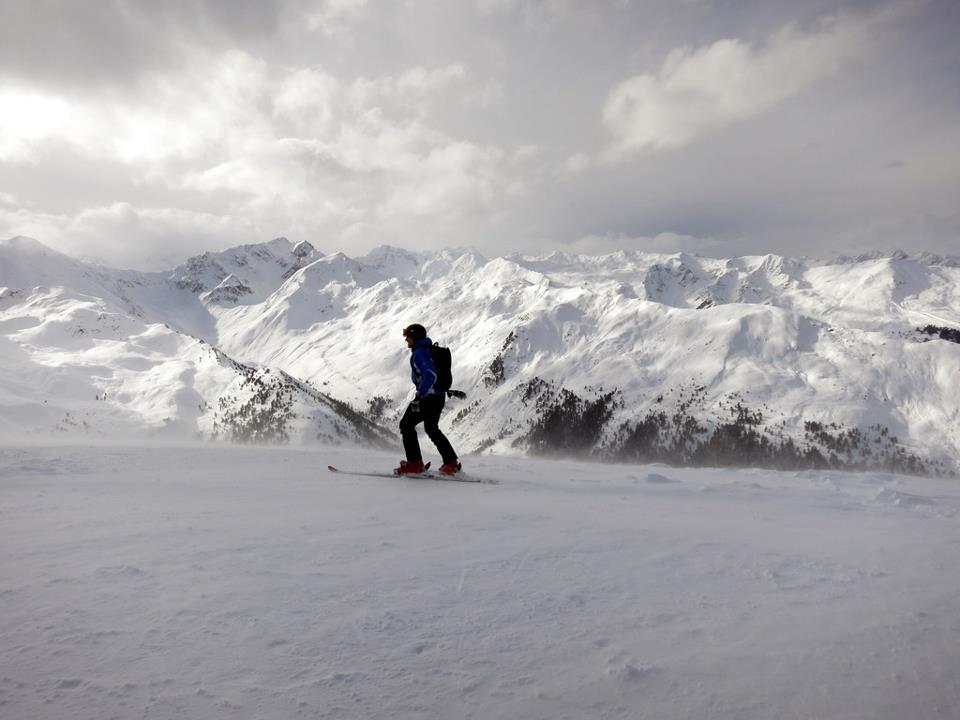
A huge bonus of living in Bavaria? The Alps are literally a short drive away! We took advantage of our prime location and a base-organized trip which included transportation, lodging, breakfast, and super-discounted ski and snowboard rentals for a long weekend skiing in the Alps.
Though skiing in Axamer-Lizum, Austria (home of the 1964 Olympic alpine skiing events) and Garmisch, Germany sounds advanced, it sadly didn't magically improve my ski and snowboard skills. Regardless, here are some of the most memorable pieces of the trip:


Après-ski at the top of the mountain:

Though I was not skilled enough to make it to the authentic ski-in Apres-Ski on the Olympic run, the huts I made it to still had a way of making Jager shots (thanks, Chris!) seem chic.


Crazy European outfits:

I honestly felt like I had stepped into a mid-70s ski lodge movie set at times. It was harder than I thought to capture this on film, so these may or may not be American stand-ins...


'Learning' to snowboard:

A reliable source told me that the bunny-hops on the Alps are equivalent to double black diamonds in Colorado.


The views: 

Almost everywhere you looked there was another absolutely breathtaking view. Thanks, Dan for snapping this one since I didn't make it that far on the snowboard!


Staying in the bachelor pad:

That's right, I was the lone girl in a hostel apartment with seven guys. Girls - they are all in the Army so you know they are fit, and did I mention there are a few doctors in the mix? If you hadn't planned your trip to Germany before, I bet you're looking at flights now!
Photo credit: thanks again, Dan!